The Quiet Certainty of Testing What Holds Us Up
Table of Contents
Introduction: The Hidden Design of Job Security
The Crisis of Career Volatility
- The Modern Job Market: Disruption and Uncertainty
- Identifying the Pillars of Long-Term Job Security
- The Proposition: Building Materials QC as a Counter-Cyclical Career
The Foundational Necessity of Quality Control
- Legal and Regulatory Compliance
- Financial Risk Mitigation
- Beyond the Inspector: Testing, Analysis, Documentation
Unmatched Stability: Why This Career Endures
- The Demand Loop: Construction Always Requires Testing
- Insulation from Automation
- Recession Resilience
Professional Outlook and Career Progression
- Career Ladders and Specialization
- Certifications that Guarantee Employability
Future-Proofing: The Sustainability Nexus
- The Shift to Green and Recycled Materials
- New Materials, New Testing Needs
- Building Durability and Energy Efficiency
Conclusion: A Stable Blueprint for Success
Frequently Asked Questions
Introduction: The Hidden Design of Job Security
There's work that exists at the intersection of necessity and invisibility. It doesn't make headlines. It rarely appears in career guidance materials at universities. Yet without it, nothing we build would stand, and everyone involved in construction—from developers to contractors to the families who eventually live in those buildings—would bear unacceptable risk.
I'm talking about quality control and materials testing in the building materials industry. The people who test concrete strength before it's poured into a high-rise foundation. The technicians who analyze soil compaction before a bridge is erected. The specialists who verify that recycled steel meets load-bearing requirements for a new manufacturing facility.
This work represents something increasingly rare in the modern economy: genuine, structural job security. Not the false promise of "learn to code" or the gig economy's flexible precarity, but the kind of stability that comes from being positioned at a non-negotiable checkpoint in a fundamental human activity. Because here's the thing about building: it never stops requiring verification that materials will perform as expected. Not during recessions. Not during technological disruption. Not ever.
Employment in non-residential construction rose by nearly 4% in 2024, with the construction sector reaching 8.3 million workers in July of that year. Between August 2023 and July 2024, the construction industry had an average of 382,000 job openings each month. This isn't just growth—it's persistent, structural demand that shows no signs of abating.
This career path offers something almost unprecedented in today's job market: the ability to genuinely de-risk your professional future. Not through diversification or constant reinvention, but through mastery of skills that sit at the foundation of how we build our world.
The Crisis of Career Volatility
The Modern Job Market: Disruption and Uncertainty
We live in an era where career advice has become almost paralyzingly complex. The proliferation of choices masks a deeper anxiety: in a world of constant technological change, increasingly globalized competition, and the looming presence of artificial intelligence, how do you build a career that will still matter in ten years? Twenty years?
The dominant narrative pushes towards flexibility, continuous learning, and the ability to pivot. These aren't bad things. But they represent a fundamentally reactive posture—one that assumes your current skills will inevitably become obsolete, that your industry will be disrupted, that you must constantly be preparing for the next transformation.
This creates a particular kind of exhaustion. The constant need to stay "relevant." The nagging suspicion that whatever you're currently doing might be automated or outsourced or simply rendered unnecessary by the next wave of innovation.
Identifying the Pillars of Long-Term Job Security
But some kinds of work resist this pattern. Not because they're immune to technological change—nothing is—but because they're anchored in fundamental physical and regulatory realities that don't change with the business cycle or the latest software breakthrough.
The pillars of genuine job security include:
Non-discretionary demand: Work that must be done regardless of economic conditions. Not "nice to have" services that get cut when budgets tighten, but activities required by law or basic safety considerations.
Physical presence requirements: Tasks that genuinely require a human being in a specific location, making remote work or offshoring impractical or impossible.
Judgment and expertise: Roles where the value comes not from routine execution but from trained interpretation, where context and experience matter more than process.
Regulatory protection: Fields where legal and safety requirements create barriers to entry and ongoing demand for credentialed professionals.
Quality control in building materials checks every single one of these boxes.
The Proposition: Building Materials QC as a Counter-Cyclical Career
The building industry has a reputation for volatility. Housing markets boom and bust. Commercial real estate goes through cycles. We all remember 2008. So how can a construction-adjacent career offer stability?
The answer lies in understanding what quality control actually is within building and construction. It's not about building volume—it's about building correctly. And the regulatory and liability frameworks that govern construction ensure that testing and verification remain constant even when the amount of building varies.
The US construction industry was projected to grow by 4.5% in real terms in 2024 and 4% in 2025, with growth supported by both public and private investments through government stimulus packages including the Infrastructure Investment and Jobs Act. After a lackluster period, nonresidential construction spending was expected to increase in 2025 by 6.9%, followed by 5% and 4.3% in following years.
But beyond these growth figures, consider what drives consistent demand: infrastructure must be maintained and rebuilt. Government facilities must be constructed. Data centers supporting our digital economy need to be built. Electricity capacity expansion driven by renewable energy sources, the expanding appetite for data and AI technologies, and growth in electric vehicle infrastructure are key drivers behind construction employment growth over the next decade.
Quality control testing is required for all of it. The work may shift from residential to commercial to infrastructure, but the fundamental need never disappears.
The Foundational Necessity of Quality Control
Legal and Regulatory Compliance (Codes and Standards)
To understand why quality control careers offer such stability, you need to understand the regulatory architecture that makes this work non-negotiable.
Building codes aren't suggestions. They're legal requirements that carry serious consequences for violation. When a concrete foundation is poured for a hospital, someone must verify that the concrete meets specific strength requirements outlined in ASTM standards. When asphalt is laid for a highway, testing must confirm proper compaction and composition. When soil is prepared for a bridge foundation, verification of load-bearing capacity isn't optional.
These aren't internal quality preferences that a company might choose to skimp on during tough times. They're legal requirements enforced by building inspectors, reviewed by engineers who can lose their licenses for non-compliance, and backed by liability concerns that keep insurance companies very interested in proper testing protocols.
The specific standards—ASTM testing methods, AASHTO protocols, ACI requirements—create a technical language that ensures consistency across projects, regions, and time periods. A concrete cylinder test performed in California must follow the same methodology as one performed in Ontario. This standardization creates both quality assurance and career portability.
Financial Risk Mitigation (Preventing Costly Rework and Failures)
Beyond the regulatory mandate, there's a cold financial logic that makes quality control indispensable: the cost of failure is astronomical.
Consider a concrete pour for a parking structure. If the concrete doesn't meet strength specifications and that's only discovered after it cures, the options are all terrible. Demolish and rebuild—massively expensive. Accept the structural weakness—opening up enormous liability. Try to remediate with additional structural support—complicated, expensive, and still risky.
The cost of proper testing before the pour? A few hundred dollars. The cost of discovering a problem afterward? Potentially hundreds of thousands or millions.
This cost-benefit analysis doesn't change with the business cycle. If anything, it becomes more important during lean times when companies can least afford expensive mistakes. Quality control isn't overhead—it's insurance. And companies cut many things before they cut insurance.
The Definition of the Role: Beyond the Inspector (Testing, Analysis, Documentation)
There's a common misconception that quality control is just about checking boxes and saying "yes" or "no." The reality is considerably more sophisticated.
A materials testing technician is part scientist, part detective, and part translator. They don't just test—they interpret results in context, understand how different conditions affect material performance, and communicate technical findings to people with varying levels of technical expertise.
Consider a concrete field testing technician conducting a slump test on freshly mixed concrete. They're not just measuring how far the concrete slumps. They're evaluating workability, observing for segregation, considering ambient temperature effects, understanding how the mix design relates to the intended use, and making real-time decisions about whether the batch meets specifications or requires adjustment.
The work requires:
- Technical knowledge: Understanding material science, testing methodologies, and specification requirements
- Practical skills: Properly executing standardized tests with precision
- Analytical judgment: Interpreting results and understanding their implications
- Documentation: Creating clear, legally defensible records
- Communication: Explaining technical findings to various stakeholders
This combination of skills creates work that's resistant to automation. You can't remote into a construction site. You can't outsource the judgment call about whether a soil sample meets compaction requirements. You can't automate the interpretation of unexpected test results in the field.
Unmatched Stability: Why This Career Endures
The Demand Loop: Construction Always Requires Testing
Here's the fundamental equation: as long as humans build structures, those structures must be tested to ensure they're safe and compliant. This creates a demand loop independent of typical economic drivers.
During building booms, the volume of testing increases. More buildings mean more concrete tests, more soil analyses, more material verifications. QC technicians are in high demand.
During construction slowdowns, regulatory requirements don't relax. The buildings that are constructed still require full testing protocols. Infrastructure projects—often counter-cyclical because governments increase spending during downturns—continue. Maintenance and renovation work persists. The nature of the work may shift, but the fundamental demand remains.
Public spending in 2025 was driving building activity, with U.S. public sector bids up 3.4%, while infrastructure and institutional projects like schools and hospitals were seeing growth. This public sector stability provides a buffer against private sector volatility.
Insulation from Automation
There's considerable anxiety about automation and AI replacing human workers. This anxiety is well-founded in many sectors. But quality control in construction materials occupies a rare position: it requires physical presence, real-time judgment, and contextual interpretation in variable field conditions.
Can technology augment this work? Absolutely. Digital tools for recording results, advanced sensors for some measurements, and software for analyzing trends all make the work more efficient. But the core function—being physically present at construction sites, properly collecting samples, executing standardized tests, and interpreting results in context—resists full automation.
Why? Several reasons:
Environmental variability: Building sites aren't controlled environments. Weather changes, material conditions vary, unexpected issues arise. Human judgment remains superior for navigating this variability.
Physical manipulation: Many testing procedures require careful physical handling—collecting representative soil samples, properly making concrete cylinders, conducting compaction tests. These are difficult-to-automate physical tasks in unstructured environments.
Liability and regulation: The existing regulatory framework is built around certified human professionals conducting tests according to standardized methods. Changing this framework to allow fully automated testing would require massive regulatory revision—a slow process even if the technology were ready.
Interpretation requirements: Test results aren't always straightforward. Anomalies occur. Context matters. An experienced technician knows when an unexpected result might indicate a real problem versus when it might reflect testing conditions or sample collection issues.
Recession Resilience
One of the most compelling aspects of this career path is its resilience during economic downturns. While construction as a whole experiences cycles, quality control maintains steadier demand for several reasons:
Infrastructure spending increases: Governments often respond to recessions with infrastructure investment. Infrastructure spending from the Bipartisan Infrastructure Law was continuing to support building activity, with significant growth expected in categories like bridges, dams, canals and marine infrastructure, and roads. All require extensive materials testing.
Regulatory compliance doesn't pause: Economic hardship doesn't exempt builders from testing requirements. If anything, scrutiny may increase as building departments try to prevent corners being cut.
Liability concerns intensify: During tough economic times, developers and contractors become even more risk-averse about potential failures that could result in costly litigation or project delays.
Maintenance and repair work continues: Even when new construction slows, existing infrastructure requires ongoing maintenance, which involves testing and verification work.
While construction spending has leveled off amid high interest rates and policy uncertainty, infrastructure spending from recent federal stimulus has grown significantly, driven by investment in highways, water systems and waste infrastructure.
Professional Outlook and Career Progression
Career Ladders and Specialization
One of the understated strengths of quality control careers is the clear progression path and multiple specialization options. This isn't a dead-end job—it's the entry point to a professional field with considerable upward mobility.
Entry Level: Field Testing Technician
Most people enter the field as field testing technicians. The average salary for a Building Materials Testing Technician is approximately $53,400 per year in the United States, with a typical pay range between $44,399 at the 25th percentile and $64,783 at the 75th percentile annually as of August 2025,
This starting salary is competitive with many positions requiring bachelor's degrees, and many technician positions require only a high school diploma plus certifications. The work involves:
- Conducting field tests on concrete, asphalt, and soils
- Collecting samples for laboratory analysis
- Recording and reporting test results
- Ensuring compliance with project specifications
Mid-Level: Laboratory Technician or Senior Field Technician
With experience and additional certifications, technicians can advance to laboratory positions or senior field roles. These positions involve more complex testing, training junior technicians, and greater responsibility for project oversight. Salaries increase accordingly, with experienced professionals earning in the $60,000-$75,000 range.
Advanced: Site QC Manager
Site quality control managers oversee all testing activities for specific projects. They coordinate between testing labs, contractors, and engineers, resolve quality issues, and ensure comprehensive compliance. These positions typically pay $75,000-$95,000 and require both technical expertise and project management skills.
Senior: Corporate QA/QC Manager
At the corporate level, QA/QC managers develop company-wide quality programs, train staff, maintain relationships with certification bodies, and ensure the company's quality systems meet industry standards. These positions can exceed $100,000 annually and offer considerable professional prestige.
Specialization Pathways
The field also offers various specialization options:
- Concrete Testing: Focusing on concrete strength, mix design verification, and concrete technology
- Asphalt and Paving: Specializing in asphalt mix design, compaction testing, and pavement evaluation
- Geotechnical Testing: Concentrating on soil mechanics, foundation testing, and subsurface investigation
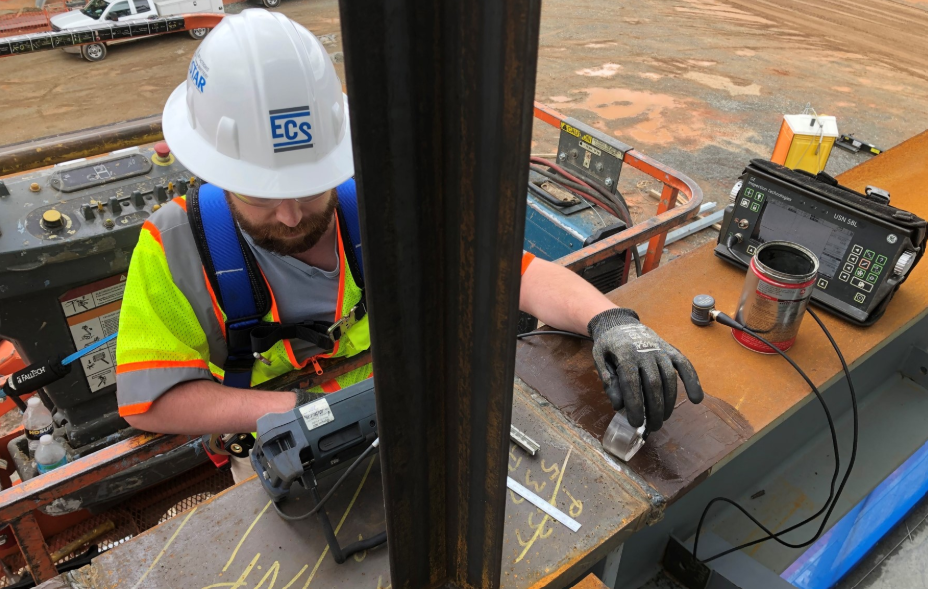
- Non-Destructive Testing (NDT): Using ultrasonic, radiographic, or other methods to test structures without damaging them
- Structural Inspection: Advanced inspection of existing structures, often requiring engineering knowledge
Each specialization offers its own certification pathways and career opportunities, allowing professionals to develop deep expertise in areas that interest them.
Certifications that Guarantee Employability
Professional certifications are the currency of credibility in quality control. Unlike many fields where certifications are nice-to-have resume builders, QC certifications are often legally required for certain types of work. This makes them genuine guarantees of employability.
American Concrete Institute (ACI) Certifications
The ACI is the gold standard for concrete testing certification. ACI offers over 30 certification programs within the concrete construction industry and has administered exams to over 550,000 individuals since 1980.
The most common starting certification is the ACI Concrete Field Testing Technician - Grade I, which demonstrates knowledge and ability to properly perform and record seven basic field tests on freshly mixed concrete. The program requires working knowledge of specific ASTM test methods including temperature measurement, sampling procedures, slump testing, density and air content determination, and making test specimens. Certification requires passing both written and performance examinations, with certification valid for five years.
Other valuable ACI certifications include:
- Aggregate Testing Technician
- Concrete Strength Testing Technician
- Self-Consolidating Concrete Testing Technician
National Institute for Certification in Engineering Technologies (NICET)
NICET provides certification programs for construction materials testing with progressive skill levels from Level I to Level IV. These certifications demonstrate increasing levels of expertise and are recognized across the industry. The progression from Level I to Level IV creates a clear roadmap for professional development.
OSHA Safety Certifications
Given the construction site environment, OSHA safety training certifications (particularly OSHA 30-Hour Construction) are often required and demonstrate commitment to workplace safety.
State-Specific Certifications
Many state Departments of Transportation offer their own certification programs or partner with universities to provide certification. These are particularly important for public works projects and often provide networking opportunities with potential employers.
The Economic Value of Certification
These certifications aren't expensive academic exercises. Certification courses typically last 2-3 days and require passing both written and performance examinations. The investment is modest—usually a few hundred dollars and a few days of time—but the return is substantial. Certified technicians command higher salaries, have access to better job opportunities, and enjoy greater job security.
Importantly, certifications require periodic renewal (typically every 3-5 years), which ensures professionals stay current with evolving standards and maintains the value of the credential.
Future-Proofing the Career: The Sustainability Nexus
The Shift to Green and Recycled Materials
If you want to understand why building materials quality control isn't just stable but actually positioned for growth, you need to understand what's happening in sustainable construction. This isn't some distant green future—it's happening now, and it's creating unprecedented demand for sophisticated materials testing.
The global green building materials market was estimated at $285.89 billion in 2024 and is projected to reach $458.61 billion by 2030, growing at a compound annual growth rate of 8.5%. The global market for low-carbon construction materials was estimated at $66.2 billion in 2024 and is projected to reach $79.2 billion by 2030.
This growth isn't just about volume—it's about complexity. Traditional materials like concrete and steel are well-understood, with decades of testing protocols and performance data. Sustainable alternatives? They're new territory.
Consider some of the materials reshaping construction:
Cross-Laminated Timber (CLT): Engineered wood products that can replace steel and concrete in many applications, offering carbon sequestration benefits. But they require new testing methodologies to verify structural performance, moisture resistance, and fire safety.
Recycled Steel: While steel itself is familiar, verifying the quality and performance characteristics of recycled steel requires careful testing to ensure it meets structural requirements.
Low-Carbon Concrete: Concrete alternatives using fly ash, slag, or even recycled materials require extensive testing to verify they achieve the necessary strength and durability while reducing carbon footprint.
Hempcrete and Bio-Based Materials: Materials like hempcrete offer excellent insulation and sustainability benefits but are relatively new to mainstream construction, requiring development of testing standards and verification protocols.
Self-Healing Concrete: Innovative concrete that can repair its own cracks using bacteria or other mechanisms needs rigorous testing to verify performance claims.
Each of these materials creates demand for quality control professionals who can develop, implement, and execute appropriate testing protocols. The shift to sustainable building materials doesn't reduce the need for testing—it intensifies it.
New Materials, New Testing Needs: QC as the Gatekeeper of Sustainable Building
Here's the critical insight: sustainable materials can only achieve mainstream adoption if they can be reliably tested and verified. You can't simply declare that a new material is "as strong as concrete" or "suitable for structural use." You need standardized testing methodologies, performance data, and quality control protocols.
This creates a fascinating dynamic: quality control professionals become essential gatekeepers in the transition to sustainable building. They're not just testing materials—they're helping establish the testing frameworks that make new materials possible.
In 2025, principles of circular economy such as material reuse and reduction of construction waste became established as common and priority practices in construction projects, including use of recycled concrete, reusable modular structures, and on-site recycling systems.
Consider what this means practically: a QC technician working with recycled concrete aggregate isn't just following established ASTM standards—they might be helping develop those standards. They're generating the performance data that will determine whether a material is viable for mainstream adoption.
This positions quality control professionals not as rote executors of tests but as essential participants in construction innovation. As the industry continues its necessary evolution toward sustainability, the people who can verify that new materials actually work become increasingly valuable.
The Role in Building Durability and Energy Efficiency
Sustainable building isn't just about the materials you use—it's about creating structures that last longer and perform more efficiently. Quality control is central to both objectives.
Durability Testing: Buildings that last longer have lower lifecycle environmental impacts. Proper testing during construction ensures materials will perform as designed over decades, not fail prematurely requiring replacement. Corrosion testing for reinforcing steel, permeability testing for concrete, durability testing for exterior materials—all of these help ensure long-term building performance.
Thermal Performance: Energy-efficient buildings require effective insulation and air barriers. Quality control testing verifies that insulation is properly installed, that building envelopes achieve designed air-tightness, and that thermal bridges are minimized. Building performance depends not just on specifying the right materials but on verifying they're correctly installed.
Water Management: Proper moisture control is essential for both durability and indoor air quality. Testing protocols for waterproofing, drainage systems, and vapor barriers help prevent the moisture intrusion that causes premature building failure and indoor air quality problems.
The shift toward high-performance building standards—whether LEED certification, Passive House standards, or net-zero energy buildings—increases rather than decreases the need for rigorous quality control. These advanced building systems require precise execution, and quality control professionals verify that execution.
Green certifications like LEED rate buildings based on sustainable initiatives used in the project, with developers committing to holistically sustainable projects by pursuing these certifications. Quality control documentation is essential evidence for these certification processes.
Conclusion: A Stable Blueprint for Success
We began by asking how to genuinely de-risk a career in an era of volatility. The answer, counterintuitively, might lie in work that's fundamental rather than fashionable, essential rather than innovative.
Building materials quality control and testing offers something increasingly rare: structural job security rooted in non-negotiable necessity. The work exists at the intersection of legal requirement, financial prudence, and basic safety. It requires physical presence, contextual judgment, and technical expertise in ways that resist automation. It spans economic cycles because testing requirements don't pause during recessions.
The compensation is competitive—starting around $53,000-$55,000 annually for entry-level positions, with experienced technicians earning $60,000-$75,000 and management positions exceeding $95,000. The career progression is clear, with multiple specialization pathways. The certifications that ensure employability are achievable and relatively affordable.
But perhaps most compellingly, the field is positioned at the center of construction's evolution toward sustainability. The transition to green building materials, the emphasis on building durability and energy efficiency, the complexity of modern building systems—all of these trends increase rather than decrease the need for sophisticated materials testing and quality control.
This isn't to say the work is without challenges. It can be physically demanding. It often involves outdoor work in various weather conditions. It requires attention to detail and tolerance for repetitive procedures. Early career positions may involve irregular hours to accommodate construction schedules.
But for someone seeking genuine job security, clear professional development, and work that's genuinely important rather than artificially urgent, it's worth serious consideration. Not everyone needs to—or should—pursue a conventional white-collar knowledge work career. The assumption that security requires a four-year degree and a desk job has always been questionable. In the current moment, it might be actively misleading.
The buildings, roads, and bridges that make up our physical world aren't going away. They all require testing and verification. As long as humans build, they'll need people who can verify that what they're building will hold up. That's not a prediction about the future—it's a statement about the present that will remain true for as long as we can reasonably forecast.
In a world of manufactured career volatility, perhaps the most radical move is to position yourself at one of the genuine foundations—doing work that simply must be done, that can't be easily automated or outsourced, and that will matter just as much in twenty years as it does today.
That's not just a job. It's a blueprint for stability in an age that offers precious little of it.
Frequently Asked Questions
What does a Quality Control Technician do?
Quality control technicians in construction inspect and test building materials—concrete, asphalt, soils, and structural components—before, during, and after production to ensure they meet specifications and industry standards. Their duties include collecting samples from construction sites, performing standardized tests according to ASTM and AASHTO methods, recording detailed data, analyzing results, and reporting any issues to project managers and engineers. The work combines hands-on field testing, laboratory analysis, and technical documentation.
What education is required?
Educational requirements vary by position and sector. Many entry-level positions require only a high school diploma combined with industry certifications. An associate degree in civil engineering technology, construction management, or a related field can improve job prospects and advancement opportunities. However, professional certifications from organizations like ACI, NICET, or state DOTs are often more important than formal education. These certifications demonstrate competency in specific testing procedures and are frequently required for employment.
What is the career progression?
Career progression typically follows this path: start as an entry-level Field Testing Technician conducting basic tests, advance to Laboratory Technician or Senior Field Technician with more complex testing responsibilities, move into Site QC Manager roles overseeing all quality control for specific projects, and potentially advance to Corporate QA Manager positions developing company-wide quality programs and standards. Specialization in areas like non-destructive testing, geotechnical analysis, or concrete technology can create additional advancement opportunities. Many experienced QC professionals also become independent consultants or start their own testing laboratories.
What certifications are needed?
The most valuable and commonly required certifications include ACI Concrete Field Testing Technician (Grade I) for concrete testing, NICET Construction Materials Testing certifications (Levels I-IV) for progressive skill development, and various state Department of Transportation certifications for public works projects. OSHA safety certifications (particularly OSHA 30-Hour Construction) are often required for site access. Additional valuable certifications include ACI Aggregate Testing Technician, ACI Concrete Strength Testing Technician, and specialized NDT certifications. Most certifications require passing both written and practical examinations and must be renewed every 3-5 years through continuing education or re-examination.
Is this a stable career?
Yes. Construction materials testing is fundamentally stable because it's legally required for virtually all construction projects regardless of economic conditions. Building codes mandate testing to ensure structural safety and compliance with standards. The cost of proper testing is trivial compared to the cost of structural failures or legal liability from non-compliance. Even during construction slowdowns, infrastructure projects continue (often increasing during recessions as governments invest in stimulus), existing structures require maintenance testing, and regulatory requirements don't diminish. The work is also highly resistant to automation because it requires physical presence at construction sites, contextual judgment in variable conditions, and human interpretation of results.
What is the work environment like?
This is primarily hands-on, field-based work rather than a desk job. Quality control technicians split time between construction sites, where they collect samples and perform field tests, and laboratories, where they conduct more detailed analyses. Field work involves exposure to various weather conditions, working on active construction sites with their associated noise and safety considerations, and sometimes irregular hours to match construction schedules (including early mornings, evenings, or weekends). The work can be physically demanding, requiring lifting, bending, and standing for extended periods. However, it offers variety, outdoor work, and the satisfaction of directly contributing to public safety.
What's the difference between QA and QC?
Quality Assurance (QA) is proactive and focuses on the systems, processes, and procedures designed to prevent defects from occurring. QA involves developing quality plans, establishing testing protocols, training personnel, and creating documentation systems. Quality Control (QC) is reactive and involves the actual inspections, tests, and measurements to identify defects in materials or workmanship. QC technicians execute the testing procedures that QA systems establish. Both are essential for construction quality, and professionals often work with both aspects, though entry-level positions typically focus on the QC (testing and inspection) side.
How does sustainable construction affect job opportunities?
The shift toward sustainable and green building materials is actually increasing demand for quality control professionals. New materials like cross-laminated timber, recycled concrete aggregates, low-carbon concrete alternatives, and bio-based insulation require development of new testing protocols and verification procedures. These materials can't achieve mainstream adoption without reliable testing methodologies to verify their performance. Additionally, green building certifications like LEED require extensive quality control documentation. As the construction industry continues its necessary evolution toward sustainability, professionals who can verify that innovative materials perform as intended become increasingly valuable.
What's the salary range for this career?
Entry-level Construction Materials Testing Technicians earn approximately $44,000-$56,500 annually, with the typical range for experienced technicians falling between $53,000-$64,000. Senior technicians and laboratory managers typically earn $60,000-$75,000. Site QC Managers earn $75,000-$95,000, and corporate QA/QC Managers can exceed $100,000 annually. Salaries vary by location, with higher pay in states with higher costs of living and more construction activity. Specialized certifications, particularly in areas like non-destructive testing, can command premium compensation. The combination of competitive salary, clear advancement path, and job stability makes this career financially attractive, especially considering that many entry-level positions require only a high school diploma plus certifications.